
Charles Booth’s London comes to life in Minecraft
·
Charles Booth’s London comes to life in Minecraft
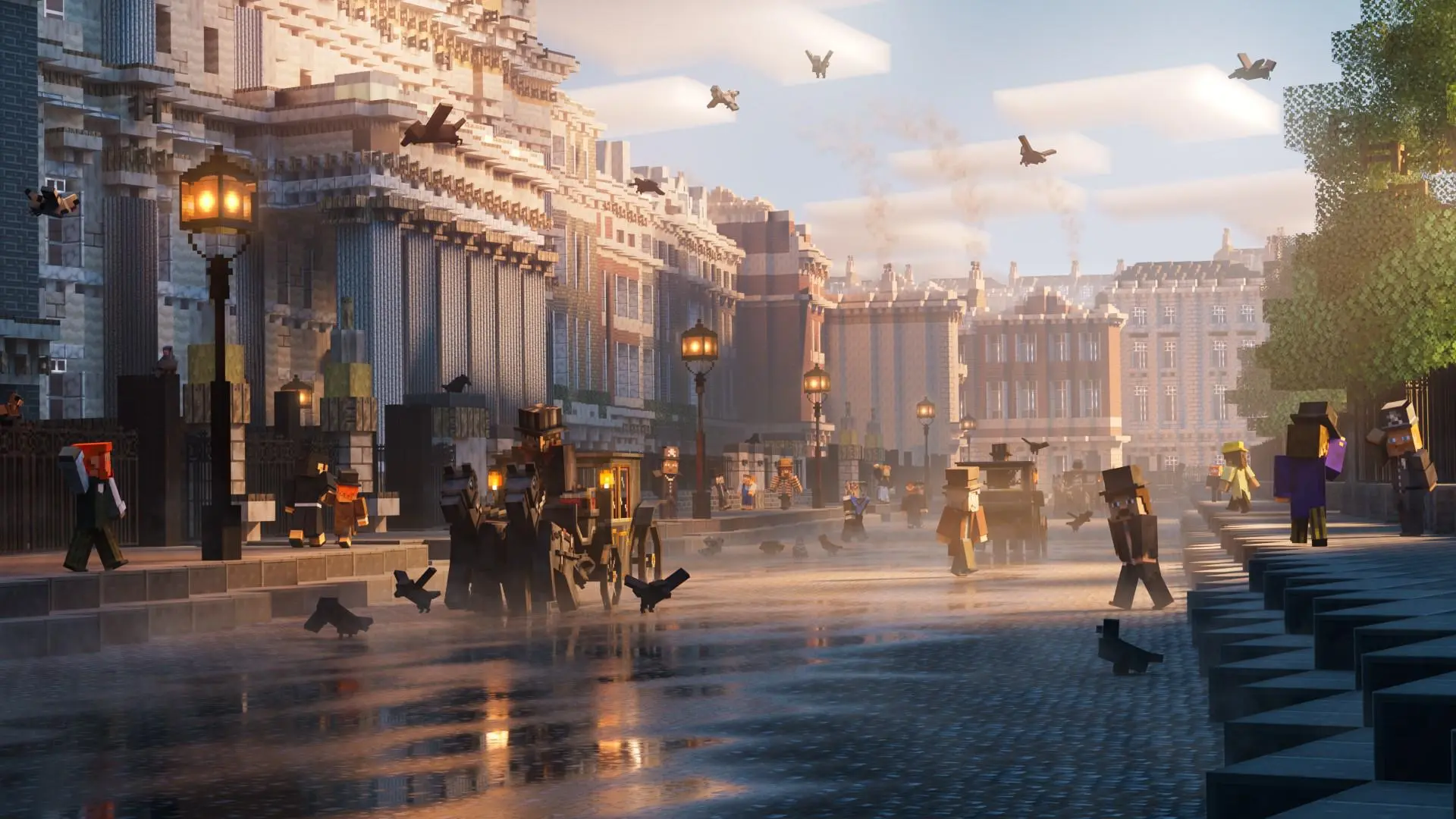
Victorian London, with all its stark contrasts of wealth and poverty, has been recreated block by block in a new educational world released for Minecraft Education. Drawing on the pioneering poverty maps of social researcher Charles Booth, the project offers players a vivid, hands-on way to explore social inequality in the capital at the end of the 19th century.
Titled Charles Booth’s London, the world has been created by the Library at the London School of Economics and Political Science (LSE) and Lancaster University, in partnership with Minecraft design specialists BlockWorks. It is based on Booth’s influential poverty maps of London, produced between 1886 and 1903 and now held in the LSE Library archive. Radical in their time, the maps revealed the true scale and geography of poverty in the city, colouring every street according to the income and social class of its residents.
The release coincides with LSE’s 130th anniversary, a year in which the university is reflecting on its historical and contemporary impact on society. More than a digital reconstruction, the Minecraft world invites users to step directly into Booth’s London and experience everyday life across the social spectrum.
Players can take part in activities that reflect the realities of Victorian urban life: catching rats in sewers, cleaning chimneys, clearing slums and helping to build new Peabody apartments for families displaced from overcrowded housing. In Covent Garden, players shop for both a wealthy household and a poorer family, highlighting the stark differences in need and opportunity. Elsewhere, they might pursue thieves in Seven Dials or conduct household surveys, mirroring Booth’s original research methods.
The game is structured around six “police walks”, inspired by Booth’s own practice of accompanying police officers on their rounds while recording detailed observations. Each walk includes a series of tasks designed to bring history to life and to give players insight into the social conditions, labour and living standards of the period.
Geographically, the world spans a large section of Bloomsbury, from Lincoln’s Inn Fields to the British Museum. Familiar landmarks such as the Royal Opera House appear alongside the LSE Library, where the game begins, before players are transported back in time to the old King’s College Hospital, which occupied the same site in the 1890s.
Developed over two years by a team of 15 professional Minecraft builders, the scale of the project is striking. The world contains more than 45 million blocks, with over 1,000 new blocks and textures created specifically to capture an authentic Victorian atmosphere – from distinctive London brickwork to wooden street paving based on Houghton Street. More than 200 characters populate the map, including Charles Booth himself and members of his survey team such as Beatrice Potter, later Beatrice Webb, who would go on to co-found LSE.
While a public version of the game will be released on the Minecraft Marketplace later this year, the project has been primarily designed as an educational resource for schools, particularly for GCSE students. It is accompanied by a learning booklet that links gameplay directly to Booth’s original maps and research, encouraging students to engage critically with historical data and social evidence.
By combining rigorous historical scholarship with one of the world’s most popular digital platforms, Charles Booth’s London offers a compelling new way to understand how social inequality shaped the city – and why those lessons still matter today.
Image of Lincoln’s Inn Fields taken from the Minecraft Education world build ‘Charles Booth’s London’.
Credit: BlockWorks (c)