
Rural Digital Needs Assessment for the World Bank
·
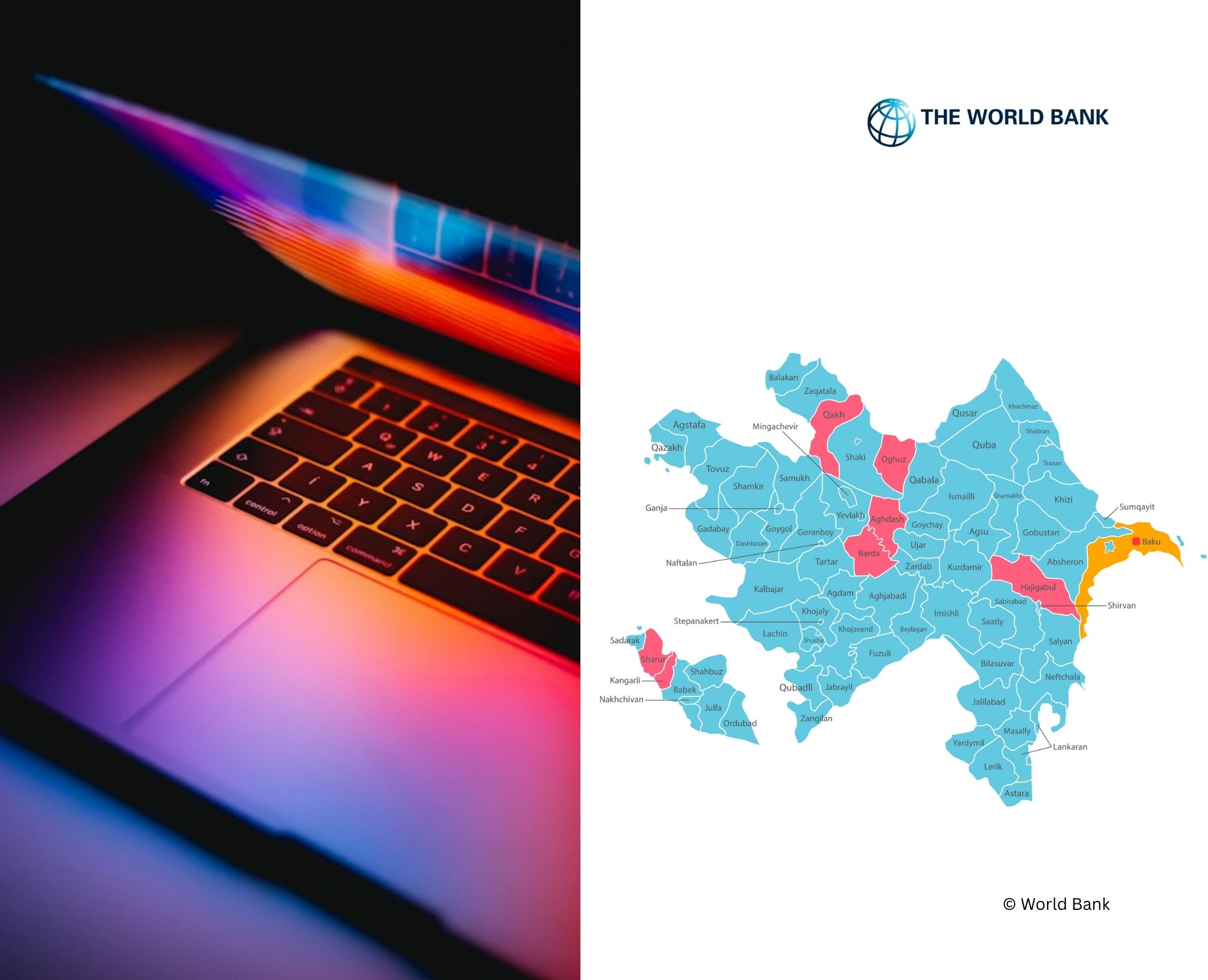
Digital Skills and Inclusion in Rural Azerbaijan
As part of Azerbaijan’s ongoing digital transformation, this project was commissioned to assess the country’s digital skills, needs, and opportunities with a particular focus on rural and semi-urban communities. Conducted in collaboration with a consultancy firm based in the United States, Ministry of Digital Development and Transport (MDDT) and building on research by the International Telecommunications Union (ITU), the study sought to identify the barriers and enablers of digital inclusion across diverse regions and population groups.
The Challenge
Following the COVID-19 pandemic, the shift to digital platforms became essential for accessing education, healthcare, financial services, and business opportunities. Yet, many rural communities in Azerbaijan remain digitally underserved.
Limited internet connectivity, a lack of access to suitable devices, and insufficient digital literacy continue to prevent individuals, farmers, and small enterprises from fully participating in the digital economy.
To address these inequalities, there was a pressing need for high-quality social research in Azerbaijan to identify specific digital skill gaps, access challenges, and training needs, forming a reliable evidence base for national policy and investment decisions.
The Approach
Our team delivered a Digital Skills Needs Assessment across nine regions – Aghdash, Barda, Gakh, Hajigabul, Kangharli, Khazar, Nesimi, Oghuz, and Sharur — using a mixed-method research design.
The study comprised:
A nationwide household survey of 1,048 respondents (1,000 completed interviews) to evaluate digital access, skills, and behaviours.
Eight focus group discussions (FGDs) with key population segments to gather qualitative insights.
Thirty-two semi-structured interviews with local stakeholders, including internet and telecom providers, women-led businesses, schools, health centres, and municipal authorities.
This multi-layered methodology ensured a comprehensive understanding of Azerbaijan’s digital landscape, capturing both quantitative and experiential perspectives.
The Solution
Drawing on the collected evidence, the research generated a series of targeted policy recommendations and strategic interventions to support Azerbaijan’s Smart Village Programme, a national initiative aimed at improving digital connectivity and service delivery in rural areas.
Our market research in Azerbaijan component explored the private sector’s role in digital expansion, identifying commercial opportunities for telecommunications, education technology, and small business support.
The social research findings, meanwhile, provided actionable insight into how digital skills could be strengthened among women, youth, and vulnerable groups, helping to close the digital divide.
The Impact
The project outcomes informed both government and development partners’ efforts to promote digital inclusion and equitable access to technology.
Key achievements include:
A detailed mapping of digital skill levels and infrastructure needs across nine districts.
Evidence-based recommendations guiding future digital literacy and connectivity investments.
Foundational input into Azerbaijan’s Smart Village strategy, advancing national goals for inclusive rural development.
Through this work, our organisation has reinforced its position as a trusted partner for social and market research in Azerbaijan, supporting data-driven decision-making that drives sustainable and inclusive digital transformation.